

『Flow Meter Boiler Feedwater Sizing: High-Temperature and High-Pressure Level Balance』Related information(v cone flow meter|rotary gas meter|gallon meter|gear meter|metal tube rotameter|glass tube rotameter|nutating disk meter|transit time ultrasonic flow meter|wedge flow meter|pd meters|hydraulic flow meter|ultrasonic water flow meter|water flow meter|air flow meter|magnetic water flow meter|oxygen flow meter|gas flow meter|argon flow meter|air velocity meter|gasoline flow meter|fuel flow meter|ultrasonic water meter|digital water meter|nitrogen flow meter|solid flow meter|Oxygen tank flow meter|digital water flow meter|diesel fuel flow meter|steam flow meter|02 flow meter|compressed air flow meter|oil flow meter|liquid flow meter)
Flow Meter Boiler Feedwater Sizing: High-Temperature and High-Pressure Level Balance
Quick Answer
For boiler feedwater lines operating at high temperature and high pressure, a vortex flow meter or a Coriolis mass flow meter usually gives the most stable long term performance. Electromagnetic flow meters can work only when the feedwater conductivity stays above a minimum threshold, often 20 µS/cm, and the liner material is rated for the actual temperature. Always size the meter for the normal feedwater flow, not the peak steam load, and confirm both the pressure rating and the temperature rating before you compare prices.
Why Boiler Feedwater Sizing Is Different
Here is the thing. Boiler feedwater is not a simple water line. The fluid is usually demineralized or deaerated. It can sit at 105 °C to 180 °C. Pressure can reach 25 bar, 40 bar, or 80 bar depending on the boiler rating. A flow meter installed here has to survive thermal cycling, high pressure spikes, and low conductivity water. If you size the meter only by pipe diameter, you will often end up with a meter that loses accuracy at low flow. That low flow is exactly where many boiler feedwater lines operate at night.
In practice, most engineers skip the temperature derating check. They buy a standard flow meter online, install it, and see the liner crack within six months. We have replaced several such units for customers in the Philippines and Oman. The failure is almost always the same. The liner or the sensor was not designed for continuous high temperature exposure.
Key Sizing Parameters for High Temperature Feedwater
You need five numbers before you ask for a quote. Pressure in bar, temperature in °C, pipe size in DN, normal flow rate in kg/h or m3/h, and water conductivity in µS/cm. For a 10 t/h fire tube boiler, normal feedwater flow may be around 12 m3/h at 25 bar and 130 °C. A DN50 pipe may be enough. A DN80 meter would push the velocity too low at night and reduce measurement stability.
Do not size the meter for a future expansion that may never happen. A slight oversize is safer than an undersize, but a meter that is two sizes too large will only read noise at 15 percent of full scale. Most flow meters work best between 20 percent and 80 percent of their range.
Flow Meter Types That Work in Boiler Feedwater Service
Vortex flow meters are a common choice. They have no moving parts, handle high temperature up to 250 °C, and tolerate pressure ratings up to 100 bar. They need a minimum Reynolds number, so very low flow at turndown can be a problem. For a boiler that cycles on and off, this matters less because the feedwater pump starts and stops with the burner.
Electromagnetic flow meters can work well if the liner is PTFE or PFA and the electrodes are suitable for deaerated water. Most standard magmeters are fine for drinking water, but demineralized feedwater can have conductivity below 10 µS/cm. That can cause unstable readings. Some models from Silver Instruments can accept conductivity as low as 5 µS/cm, but you must specify this during selection.
Coriolis mass flow meters give direct mass flow in kg/h. They are the best choice when you need tight mass balance between feedwater and steam output. The pressure drop is higher, so check the pump head. For high temperature feedwater, a standard Coriolis sensor with stainless steel tubes can handle 150 °C without much derating. For 200 °C, you need a high temperature version.
Differential pressure flow meters with orifice plates remain common in older plants. They are simple and reliable at high pressure. The downside is permanent pressure loss. A 0.5 bar loss on a feedwater pump may seem small, but over a year it adds up.
High Pressure Level Balance and Feedwater Control
Boiler drum level control depends on the balance between feedwater flow and steam flow. If the feedwater measurement drifts by 2 percent, the drum level control loop will chase the wrong value. In high pressure boilers, this leads to carryover or low w
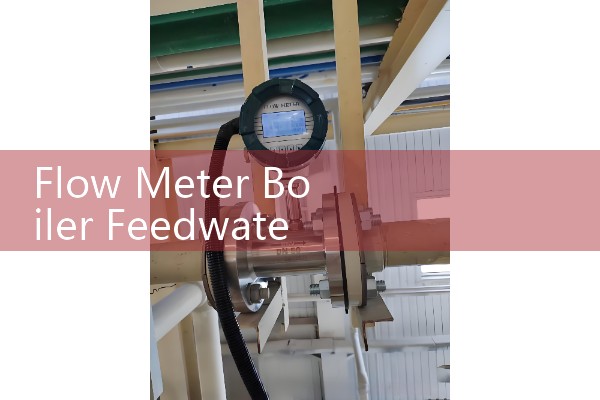
For high temperature boiler feedwater, the flow meter should be installed downstream of the feedwater control valve when possible. That location has less flashing risk. If the meter must go before the control valve, confirm that the pressure rating covers the full pump dead head pressure, not just the normal system pressure.
A Practical Sizing Example
Consider a 6 t/h shell boiler in Indonesia. Feedwater pressure is 18 bar. Water temperature at the meter is 120 °C. The pipe is DN40. Normal feedwater flow is 7 m3/h. The operator wants a 4-20 mA HART output to connect to a PLC. A full bore electromagnetic flow meter with PTFE liner and DN40 size would be a simple fit, but the water conductivity is only 8 µS/cm. In this case we recommend a vortex flow meter with an integrated temperature sensor. The customer sent us a photo of the installation and we confirmed the straight run was too short. They moved the meter to a longer pipe section with 15 DN upstream and 5 DN downstream, and the reading stabilized.
Installation Notes for High Temperature Lines
Do not insulate the flow meter body unless the manufacturer allows it. Some high temperature flow meters need cooling fins or remote electronics. In a boiler house in Saudi Arabia, the ambient air around the flow meter reached 60 °C. That is fine for a remote transmitter but too hot for a compact digital display. A remote version solved the problem.
Always check for air bubbles after the deaerator. Air or steam bubbles in the feedwater cause large errors in vortex and electromagnetic meters. Install a small air release valve upstream if needed. Also make sure the meter is not installed at the lowest point of a horizontal pipe where sludge can collect.
Pair the flow meter with a paperless recorder if you need to log feedwater flow trends for boiler efficiency checks. Silver Automation Instruments supplies pressure transmitters and paperless recorders for the same loop.
What to Send Us for a Quote
Send us these values: pressure in bar, temperature in °C, pipe size in DN, normal and minimum flow rate in kg/h or m3/h, water conductivity in µS/cm, and output signal preference such as 4-20 mA HART or pulse. Our engineers will reply with a recommended model and a price. You can reach Silver Automation Instruments by phone at +86-25-68650347, by Whatsapp at +86-25-52155837, or by WeChat at +86 15365082610.
FAQ
What flow meter is best for high pressure boiler feedwater?
A vortex flow meter is usually the best starting point for pressures up to 100 bar and temperatures up to 250 °C. A Coriolis mass flow meter is better when you need direct mass balance with steam output.
Can an electromagnetic flow meter handle boiler feedwater at 150 °C?
Yes, if you choose a PTFE or PFA liner and high temperature electrodes. The water must also have enough conductivity. Many demineralized feedwater lines do not meet this requirement.
What is the minimum conductivity for a magmeter on boiler feedwater?
Most standard magmeters need at least 20 µS/cm. Some Silver Instruments electromagnetic flow meters can operate down to 5 µS/cm, but the application must be confirmed with our engineers.
How do you size a flow meter for a steam boiler feedwater line?
Use the normal feedwater flow, the actual pipe size, and the operating pressure and temperature. Do not size only for the pipe diameter. Check the velocity range. Aim for 2 to 6 m/s for liquid flow at the normal boiler load.
What pressure rating should a boiler feedwater flow meter have?
The meter pressure rating should cover the maximum pump dead head pressure. If the normal line pressure is 25 bar, but the pump can dead head at 35 bar, then the meter should be rated for at least 40 bar.
 Hot Product
 Related AD