

『Hood Air Flow Meter Sizing: Using Capture Balancing Enclosures for HVAC Commercial Diffusers』Related information(v cone flow meter|rotary gas meter|gallon meter|gear meter|metal tube rotameter|glass tube rotameter|nutating disk meter|transit time ultrasonic flow meter|wedge flow meter|pd meters|hydraulic flow meter|ultrasonic water flow meter|water flow meter|air flow meter|magnetic water flow meter|oxygen flow meter|gas flow meter|argon flow meter|air velocity meter|gasoline flow meter|fuel flow meter|ultrasonic water meter|digital water meter|nitrogen flow meter|solid flow meter|Oxygen tank flow meter|digital water flow meter|diesel fuel flow meter|steam flow meter|02 flow meter|compressed air flow meter|oil flow meter|liquid flow meter)

Hood Air Flow Meter Sizing for HVAC Commercial Diffusers
Quick Answer: Hood air flow meter sizing starts with the diffuser face dimensions and the design supply air volume. Use a capture balancing enclosure that covers the diffuser face with a margin of at least 50 mm on all sides. For most commercial diffusers the flow range is 100 m3/h to 2500 m3/h and the hood meter should read within plus or minus 3 percent of reading.
Why Hood Air Flow Meter Sizing Matters in Commercial HVAC
HVAC commissioning teams in Southeast Asia and the Middle East use hood meters on site every week. If the hood is too small, air spills around the edges. If the hood is too large, the velocity profile gets distorted. Both errors cause a wrong final air balance. We have seen this on customer sites in Malaysia and Saudi Arabia where a mismatch of 100 mm caused a 12 percent reading error.
Capture Balancing Enclosures Explained
A capture balancing enclosure is a fabric or rigid hood that fits over a commercial diffuser. It captures all supply or return air from the diffuser face and directs it through a flow sensing element. The flow sensing element can be a differential pressure grid, a thermal sensor, or a vane anemometer array. For commercial HVAC diffusers the hood must seal around the face without blocking the air path.
Key Sizing Inputs for Hood Air Flow Meters
We ask for four numbers before sizing a hood. First, the diffuser face dimensions in mm. Second, the design supply air flow in m3/h or cfm. Third, the static pressure at the duct connection in Pa or inches w.g. Fourth, the ceiling type such as mineral fiber tile, gypsum board, or open grid. These inputs set the hood neck size and the flow sensor range.
Matching Hood Size to Diffuser Type
A standard 600 mm by 600 mm square diffuser often works with a hood that has a 750 mm by 750 mm capture face. A 300 mm round diffuser needs a round cone adapter with a 400 mm opening. Linear slot diffusers are the tricky ones. Most standard hoods do not fit a 1200 mm slot diffuser well. In practice you need a custom adapter plate. We have seen a contractor in Vietnam try to hold a square hood against a linear slot and read 20 percent low because air escaped at the ends.
Common Field Mistakes We See
One common mistake is using a hood that is too small for the diffuser. Another mistake is pressing the hood too hard against a fragile ceiling tile and deforming it. That creates a gap. Most engineers skip this part but the gap causes a low reading. Air takes the path of least resistance. We have seen a hospital project in the Philippines where the commissioning agent had to redo 40 diffuser readings because the hood gasket was worn. A new gasket fixed the issue. Check the gasket and the seams before
Recommended Verification Meter for Duct Flow
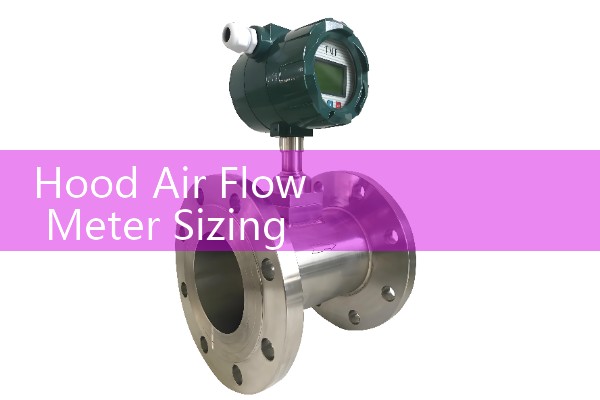
For commercial diffuser air balancing the hood should read at least 50 m3/h to 3000 m3/h. Accuracy of plus or minus 3 percent of reading is common. Resolution of 1 m3/h is enough for most jobs. If you need a verification meter for a duct traverse, Silver Instruments can supply a thermal mass flow meter with 4-20 mA HART output and a local display. This meter works on air and nitrogen. For a 200 mm round duct carrying 300 m3/h the insertion thermal meter adds less than 2 percent pressure drop. We can also quote a differential pressure transmitter with a pitot tube for larger ducts above 500 mm.
When to Use a Hood Meter vs a Duct Traverse
A hood meter is faster for occupied spaces and final diffuser checks. A duct traverse gives a more direct air flow measurement before the diffuser is connected. Many commissioning agents use both. The hood meter identifies problem diffusers. The duct traverse confirms total system flow. For a variable air volume system in a shopping mall in Indonesia, we usually suggest doing a duct traverse first on the main supply duct and then checking each diffuser with the hood. The two numbers should match within 10 percent.
FAQ for Hood Air Flow Meter Sizing
What size hood do I need for a 600 mm square diffuser? Use a capture face of at least 700 mm by 700 mm. A 750 mm by 750 mm hood is the practical choice for most commercial ceilings.
Can a hood air flow meter measure return air? Yes. Reverse the hood direction or use a model with a bidirectional sensor. Seal the hood face against the return grille the same way.
What flow range should a commercial hood meter cover? A range of 50 m3/h to 3000 m3/h covers most diffusers in offices, hospitals, and malls. Select a meter with autoranging if the building has both low and high flow zones.
How often should a hood air flow meter be calibrated? Every 12 months is standard for commissioning work. If the hood is used in dusty sites, calibrate every 6 months. Check the sensor grid for lint and dust before each project.
Does Silver Instruments sell hood air flow meters? We focus on inline and insertion flow meters for air and gas ducts. We can supply a thermal mass flow meter or a differential pressure transmitter that verifies the duct flow behind the hood reading. Send us your duct diameter, air flow range, and pressure.
For hood air flow meter sizing support and verification meter quotes, contact Silver Automation Instruments at Tel: +86-25-68650347, WhatsApp: +86-25-52155837, WeChat: +86 15365082610. Send us your diffuser size in mm, supply air flow range in m3/h, static pressure in Pa, and duct size.
 Hot Blog
 Related AD